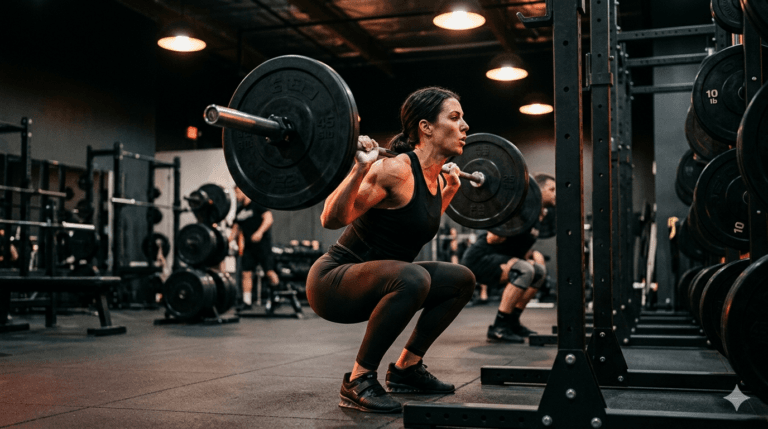
Knee pain when squatting: common mistakes and easy corrections to protect your joints today
Spread Health and Love
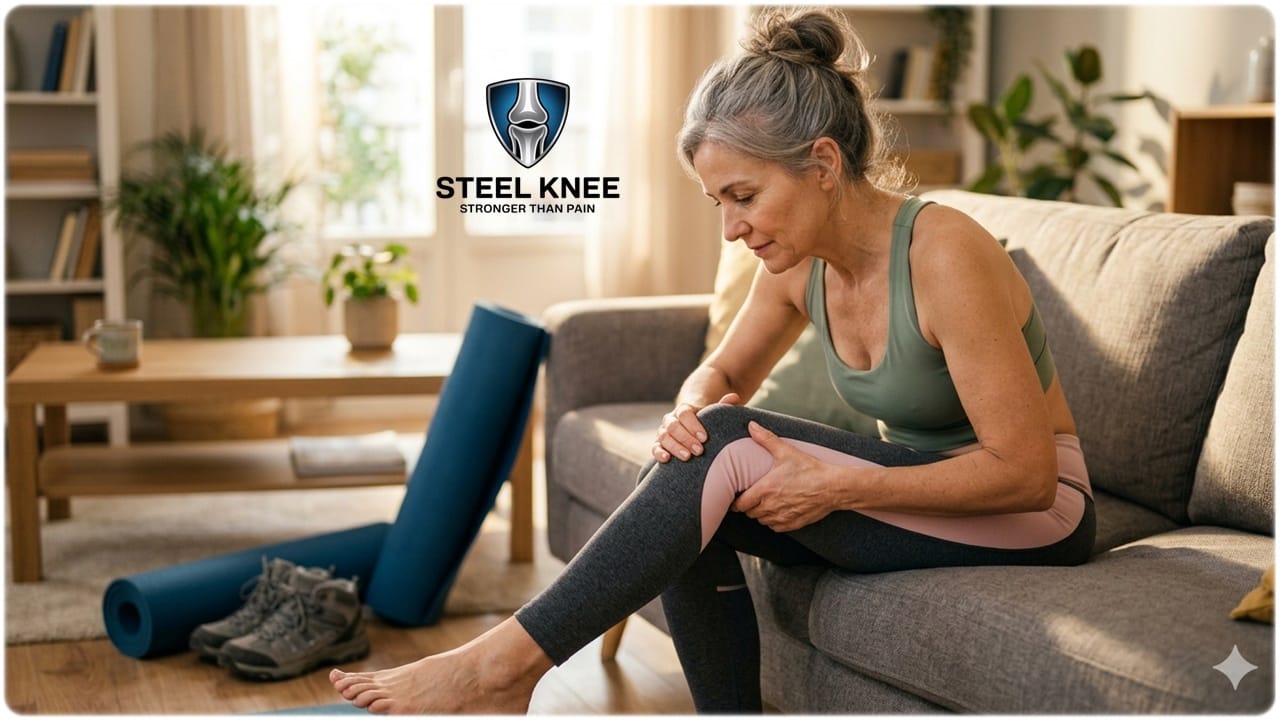
Feeling a sharp pinch or a dull ache when you try to sit back into a squat is a warning sign you shouldn’t ignore. If you struggle with knee pain when squatting, know that the squat itself is rarely the villain.
Hi, how are you? Let’s talk. In fact, it is one of the most functional and natural movements of the human body.
The problem almost always lies in faulty biomechanics or muscular imbalances that place excessive stress on the patella (kneecap).
In this guide, we will dissect why you are experiencing this discomfort and how you can reclaim your mobility without fear.
The Myth of “Knees Over Toes”
For decades, we were told that the knees should never pass the line of the toes. However, modern biomechanics shows that this rule is relative.
The Real Reason Your Knee Pain Never Goes Away
It's not age. It's not "just wear and tear." Most people are missing the root cause — and this natural formula targets it directly, fast.
For many people, trying to “lock” the knees behind the toes actually ends up overcompensating with the lower back.
The real root of knee pain when squatting is usually lateral misalignment and a lack of stability, rather than just how deep you go.
Fatal Mistakes: Why Do You Feel Knee Pain When Squatting?
To solve the problem, we must understand where the structure is failing. Here are the common errors that are wearing down your cartilage:
1. Dynamic Valgus (The Internal Collapse)
This is the most destructive error. It happens when the knees “cave in” toward each other during the descent or the ascent.
This creates uneven pressure on the joint, wearing down the meniscus and straining the ligaments.
If you feel knee pain when squatting specifically on the inner side of the knee, this is the likely culprit.
2. Lack of Ankle Mobility
If your ankles are stiff, your body compensates by shifting the excessive load to the knee.
When the ankle cannot flex enough, the heel lifts off the ground and the knee is forced to absorb the full impact of your body weight, leading to persistent pain in the front of the kneecap.
3. Gluteal Amnesia
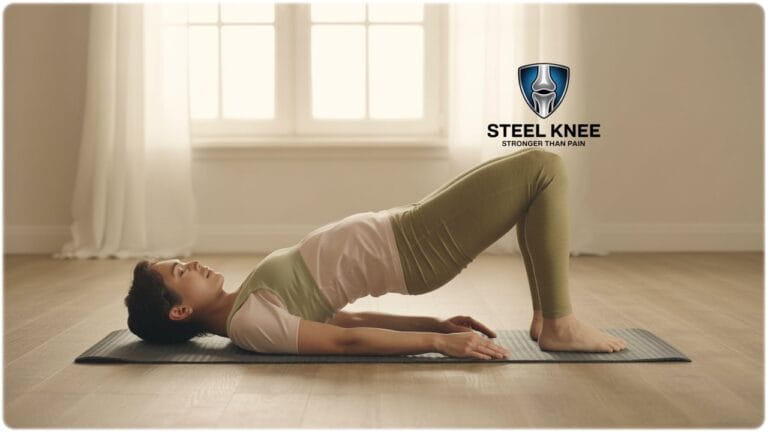
Stable knees depend on strong glutes.
If your glutes don’t “wake up” during the exercise, they cannot rotate the femur outward, leaving the knee joint unprotected and vulnerable to friction.
Practical Strategies to Eliminate Knee Pain When Squatting
Correction isn’t just about stopping the exercise; it’s about re-educating the movement. Use these strategies for a safer workout:
The “Tripod” Foot: Keep three points of your foot (heel, base of the big toe, and base of the pinky toe) firmly on the ground.
Imagine your feet are “screwing” into the floor outward. This stabilizes the base and significantly reduces knee pain when squatting.
Drive the Knees Out: Focus on pushing your knees outward so they align with your second toe.
This activates the gluteus medius, which is the primary stabilizer for your knees.
Load Progression: If the pain appears only when using weights, go back to bodyweight squats. Focus on perfect mechanics before adding intensity back into the mix.
The Connection to Overall Joint Health
Often, pain during a squat is just a symptom of a joint that is already inflamed for other reasons.
If you feel that your knees are “rusty” or stiff first thing in the morning, the issue might be synovial fluid quality.
As we explained in our previous guide on natural recipes for stiff knees, systemic inflammation can make any exercise feel painful.
Treating the inflammation from the inside out with specific nutrients can drastically decrease the incidence of knee pain when squatting.
In summary, we have reached a conclusion.
Mastering the correct technique is what separates a healthy knee from a future surgery.
Do not accept pain as a normal part of aging or heavy training.
By correcting dynamic valgus, improving ankle mobility, and activating your stabilizing muscles, you eliminate knee pain when squatting and ensure you can move with freedom for decades to come.
Note: If the pain persists even after correcting your form, consult a physical therapist to evaluate any existing structural damage or underlying conditions.
We use cookies to ensure that we give you the best experience on our website. If you continue to use this site we will assume that you are happy with it