Overpronation and Knee Pain: What’s the Connection and What You Can Do About It
Spread Health and Love
If you’ve been dealing with persistent knee discomfort and haven’t been able to pinpoint the cause, your foot posture might be the missing piece of the puzzle.
Overpronation and knee pain are more closely connected than most people realize, and understanding this relationship could be the first step toward real, lasting relief.
In this article, we’ll break down exactly what overpronation is, how it affects the biomechanics of your knee, what the research says, and — most importantly — what practical steps you can take to protect your joints and move pain-free again.
What Is Overpronation?
Pronation is a natural movement of the foot. Every time you take a step, your foot rolls slightly inward as it absorbs the impact of landing. This is completely normal and necessary for proper shock absorption.
The problem begins when this inward rolling goes too far, a condition known as overpronation, or a “pronated foot.”
The Real Reason Your Knee Pain Never Goes Away
It's not age. It's not "just wear and tear." Most people are missing the root cause — and this natural formula targets it directly, fast.
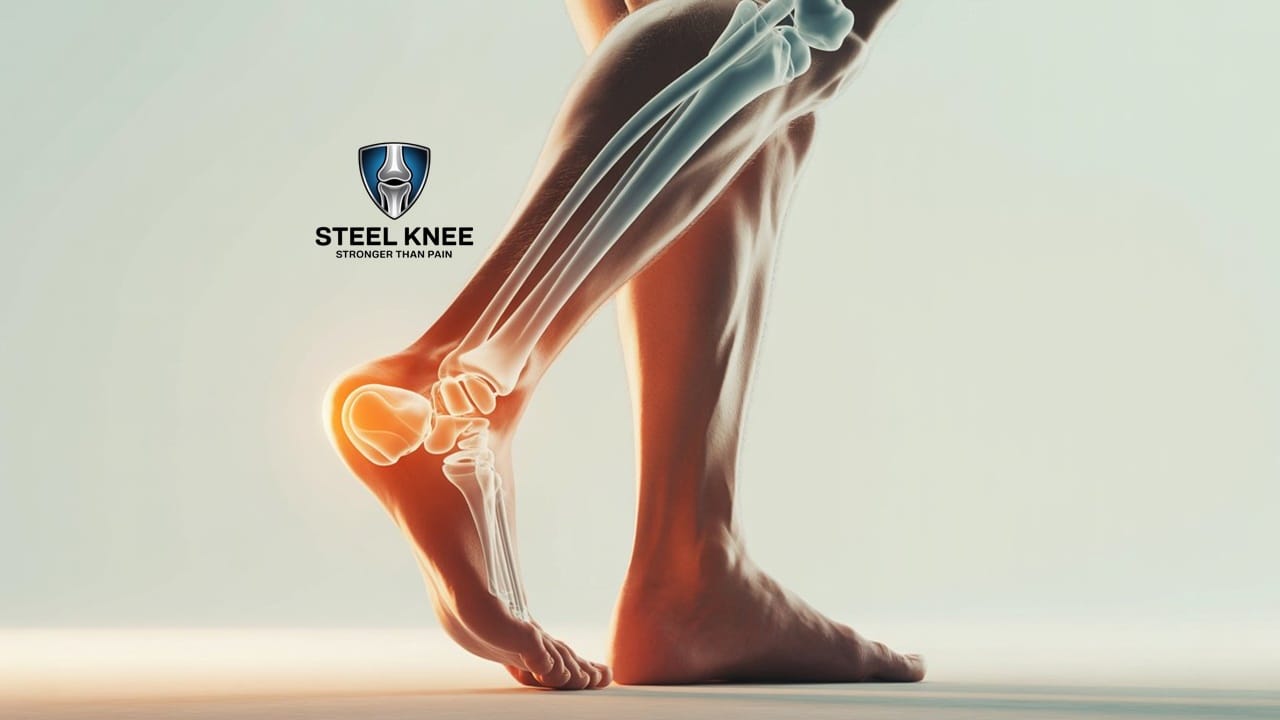
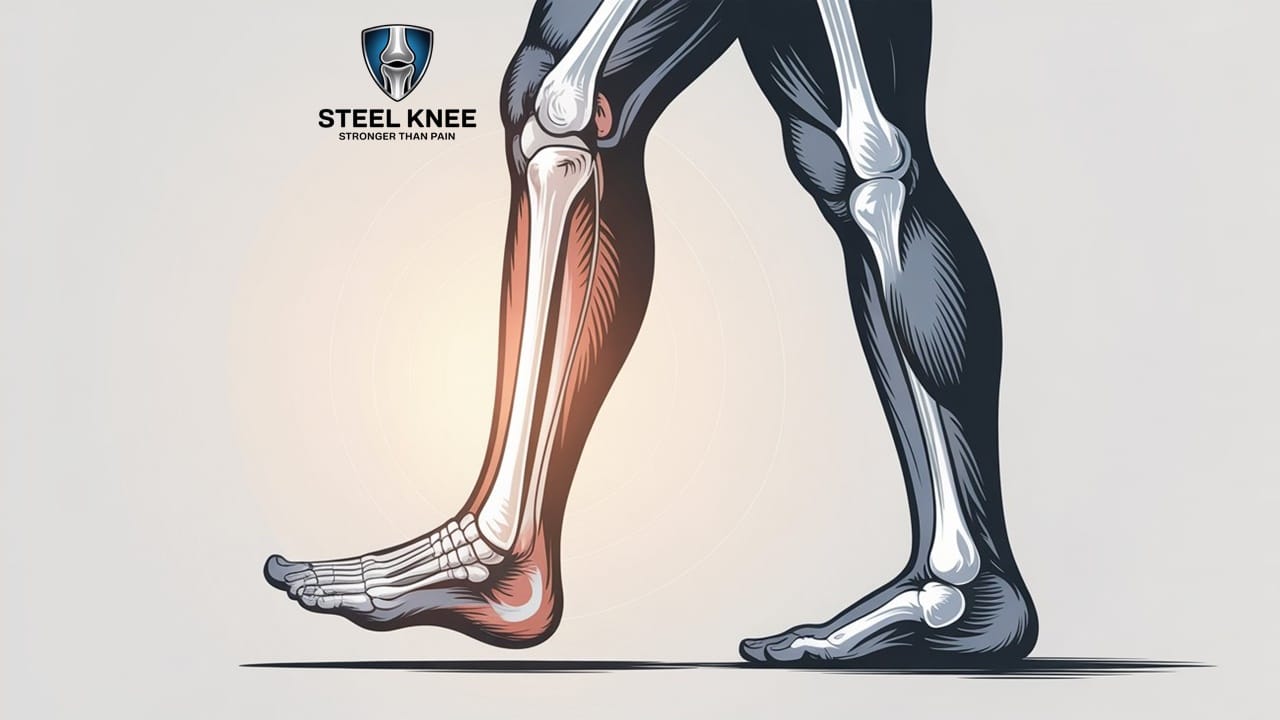
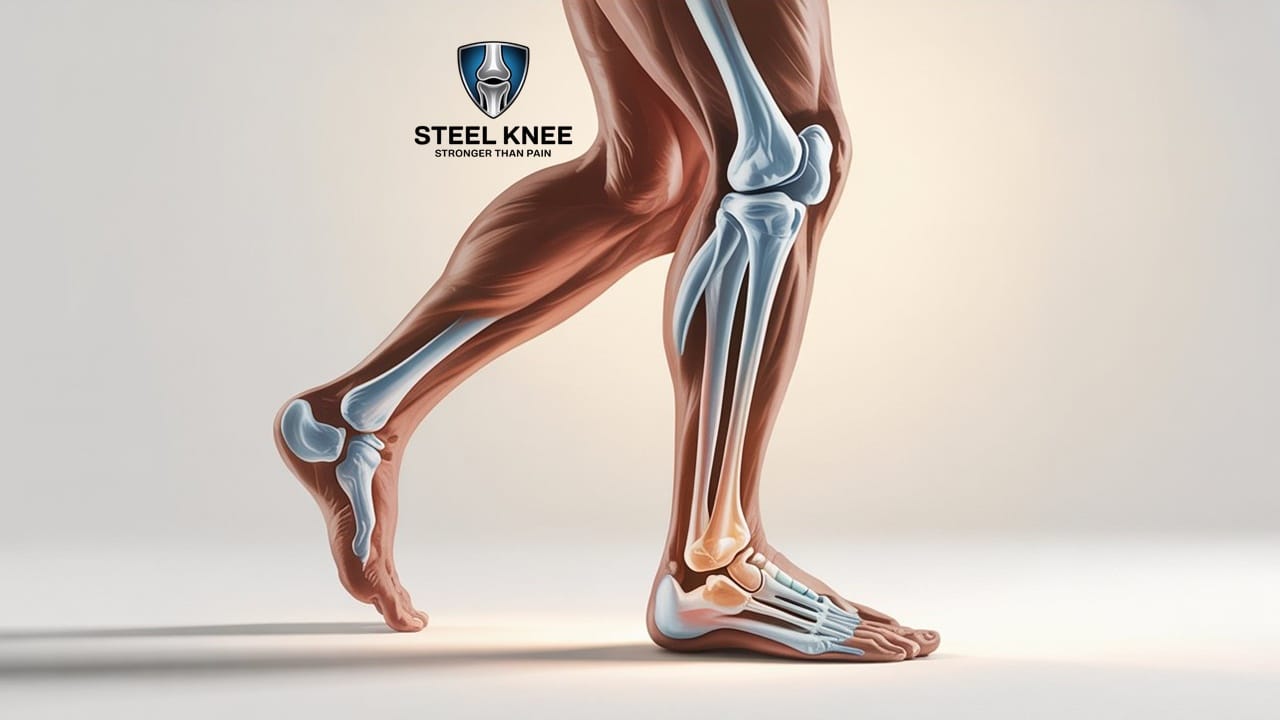
In overpronated feet, the arch flattens excessively under body weight, causing the entire foot to roll inward beyond the normal range.
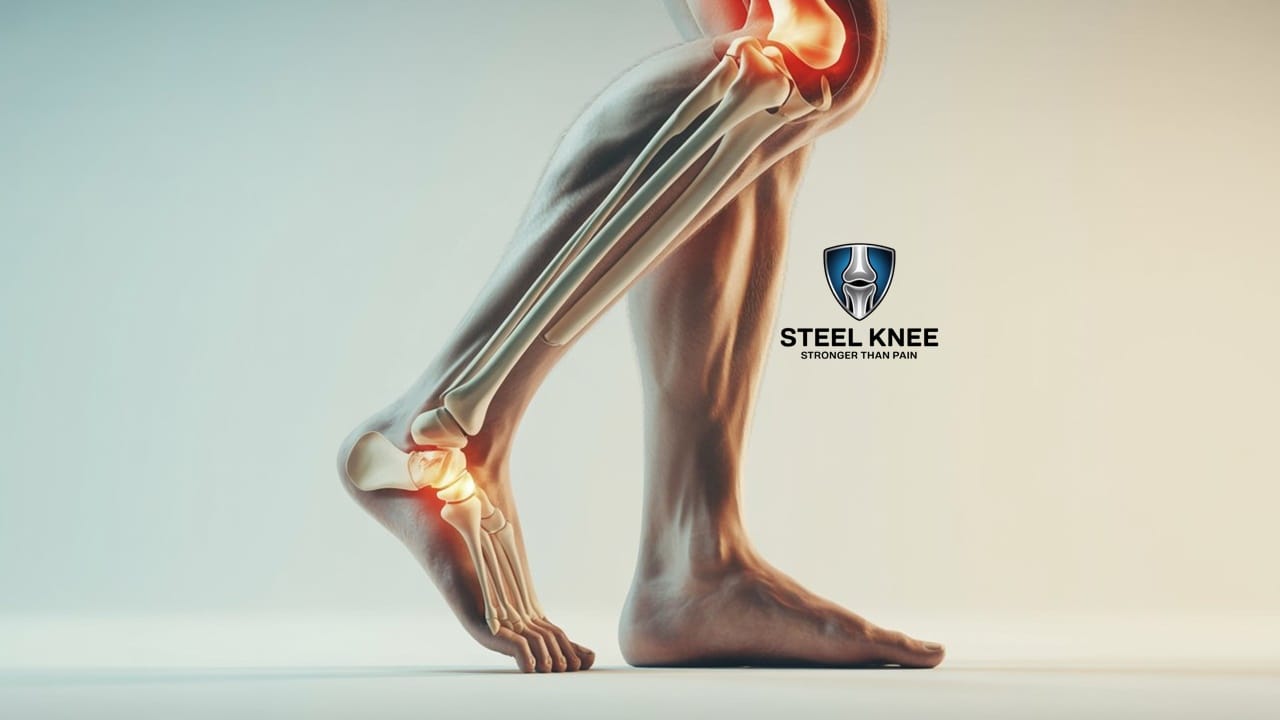
This seemingly small change in the foot has a cascade of effects that travel up through the ankle, knee, hip, and even the lower back.
Overpronation is strongly associated with flat feet (also called pes planus).
When the plantar arch is insufficient to properly distribute the body’s weight, forces concentrate along the inner (medial) side of the foot and leg, and the knee takes a significant portion of that extra load.
How Overpronation Affects Knee Biomechanics
To understand overpronation and knee pain, you need to understand what happens biomechanically when the foot rolls inward excessively.
When the foot overpronates, the center of gravity shifts medially. This causes a chain reaction throughout the lower limb:
The ankle rolls inward
The tibia (shinbone) rotates internally
The knee is pushed inward, creating what’s called a valgus alignment — commonly known as “knock-knee”
The hip adductors become overactivated
The gluteus medius (a key stabilizing muscle) weakens over time
This altered alignment puts abnormal stress on the structures of the knee, particularly the medial compartment (the inner side), the patellofemoral joint (where the kneecap sits), and the surrounding ligaments and tendons.
Over time, this chronic misalignment doesn’t just cause pain. It accelerates cartilage wear, increases the risk of ligament strain, and can lead to more serious conditions like osteoarthritis if left unaddressed.
Overpronation and Knee Pain: What the Research Says
The scientific literature is clear: overpronation and knee pain share a strong, well-documented relationship.
A landmark study found that individuals with overpronated feet have 95% higher odds of developing knee disorders compared to people with neutral foot posture.
That’s not a minor increase in risk, it’s nearly double the likelihood of knee problems, simply based on how the foot makes contact with the ground.
Another significant study conducted by Gross (2011), involving 1,903 elderly women with flat feet and overpronation, found that 63% of participants reported some form of knee pain.
Furthermore, these women were 1.3 times more likely to experience knee pain than women of the same age and profile with neutral foot posture.
Perhaps even more concerning, the same study revealed that people with overpronation are 1.4 times more likely to develop cartilage damage in the medial compartment of the knee.
Cartilage, unlike many other tissues in the body, has very limited regenerative capacity, making prevention far more valuable than treatment.
It’s important to note, however, that overpronation is a risk factor, not a guarantee of knee problems.
There are people with significant overpronation who experience no knee pain at all.
The degree of pronation, overall muscle strength, body weight, activity level, and other individual factors all play a role. But the risk is real, and it’s worth taking seriously.
Muscle Imbalances: The Hidden Consequence
One of the most underappreciated aspects of overpronation and knee pain is the muscular imbalance it creates over time.
When the foot consistently rolls inward, the body compensates by modifying posture and movement patterns throughout the entire kinetic chain. This leads to:
Overactivation of:
Hip adductors (inner thigh muscles)
Calf muscles (gastrocnemius and soleus)
Iliotibial (IT) band
Weakening of:
Gluteus medius, a critical hip stabilizer
Tibialis posterior, the primary supporter of the medial arch
Vastus medialis oblique (VMO), the inner quad muscle that stabilizes the kneecap
When the gluteus medius is weak, the hip drops on the opposite side during walking and running, further increasing the valgus stress on the knee.
When the VMO is underdeveloped, the kneecap tracks improperly, leading to patellofemoral pain syndrome — one of the most common causes of chronic knee discomfort.
The good news? These muscular imbalances are entirely reversible with targeted exercise.
They didn’t develop overnight, and they won’t disappear overnight, but with consistency, significant improvement is absolutely achievable.
Can Orthotics and Insoles Help With Overpronation and Knee Pain?
One of the most frequently asked questions about overpronation and knee pain is whether anti-pronation insoles actually make a difference.
The research suggests they can, but with important caveats.
A study by Lack (2014) examined the immediate effects of anti-pronation insoles on knee and hip alignment.
The results showed that insoles produced an immediate reduction in hip adduction, a decrease in peak gluteal muscle activity, and a reduction in internal knee rotation.
In other words, the insoles helped realign the lower limb from the ground up, reducing the mechanical stress placed on the knee.
A separate study by Telfer (2013) corroborated these findings, confirming that anti-pronation orthotics help rebalance the forces acting on the knee in people with overpronated feet.
However, and this is critical, insoles alone are not a complete solution.
They help redistribute load and reduce compensatory patterns, but they do not strengthen the muscles needed to support proper alignment independently.
Think of orthotics as a helpful tool, not a cure.
For the best outcomes, insoles should be combined with:
Targeted strengthening exercises for the glutes, hips, and foot intrinsic muscles
Proprioception training to improve balance and neuromuscular control
Footwear assessment to ensure adequate arch support and cushioning
Postural correction to address imbalances further up the kinetic chain
For those who run or engage in high-impact sports, overpronation and knee pain deserve particular attention.
Running amplifies every biomechanical imperfection, with each stride, your body absorbs forces equal to two to three times your body weight.
Even a subtle misalignment, repeated thousands of times per run, adds up to significant stress on the joints.
A study by Mei (2019) specifically evaluated the forces on the hip, knee, and ankle in overpronated runners during a 5km treadmill run.
The results confirmed that these runners exhibited increased internal hip rotation and dynamic knee valgus throughout the run, patterns that, over time, significantly raise the risk of overuse injuries.
That said, overpronation is not a disqualifier from running.
There are elite marathon runners who overpronate. The key is informed management:
Get a proper gait analysis — ideally with a sports physiotherapist or podiatrist
Wear motion-control or stability running shoes designed to reduce overpronation
Use custom or semi-custom orthotics if recommended by a specialist
Follow a structured training plan with adequate rest and recovery
Prioritize strength training — particularly for the glutes, hips, and lower leg
Increase mileage gradually to avoid overuse injuries
With the right approach, runners with overpronation can compete, perform, and stay injury-free for years.
Exercises to Address Overpronation and Reduce Knee Pain
No discussion of overpronation and knee pain would be complete without practical exercise guidance. Below are some of the most effective movements for correcting the underlying muscle imbalances:
1. Glute Bridge Lie on your back with knees bent and feet flat on the floor. Drive your hips upward, squeezing the glutes at the top.
This targets the gluteus maximus and medius, two of the most important muscles for controlling knee alignment.
2. Clamshells Lie on your side with hips and knees bent at 45 degrees. Keeping your feet together, raise your top knee as high as possible without rotating your pelvis.
This directly targets the gluteus medius, the primary muscle that prevents knee valgus.
3. Single-Leg Stance Stand on one foot for 30–60 seconds.
This simple exercise challenges the entire stabilizing chain of the lower limb and dramatically improves proprioception over time.
4. Arch Doming (Short Foot Exercise) While seated or standing, try to lift the arch of your foot without curling your toes.
This activates the intrinsic foot muscles that support the medial arch, directly addressing the root of overpronation.
5. Resistance Band Walks (Lateral) Place a resistance band around your ankles and walk sideways in a controlled manner, maintaining a slight squat position.
This is one of the most effective exercises for strengthening the gluteus medius and improving hip stability.
6. Step-Downs Stand on a step and slowly lower one foot toward the ground, controlling the movement with the standing leg.
Focus on keeping the knee aligned over the second toe throughout the movement. This is excellent for VMO activation and knee tracking correction.
Aim to perform these exercises 3–4 times per week.
Progress gradually, and if you experience any sharp or worsening pain, consult a physiotherapist before continuing.
When to See a Professional
While the self-management strategies outlined above are effective for many people, there are situations where professional evaluation is essential:
Knee pain that persists for more than two to three weeks despite rest
Swelling, warmth, or redness around the knee joint
Pain that wakes you at night or significantly limits daily activities
A history of knee injuries or surgery
Suspected cartilage damage or ligament involvement
A sports medicine physician, orthopedic specialist, or physiotherapist can provide a comprehensive assessment, including gait analysis, imaging if necessary, and a personalized treatment plan.
Key Takeaways
Overpronation and knee pain are closely linked through a well-established chain of biomechanical events.
When the foot rolls inward excessively, the entire lower limb is affected — and the knee, positioned in the middle of this chain, often pays the highest price.
The relationship is supported by solid research: overpronated individuals face significantly higher risks of knee pain, cartilage damage, and joint disorders.
But this is not a life sentence. With the right combination of footwear, orthotics, targeted exercise, and professional guidance, it is entirely possible to break the cycle, protect the knee, and return to full, pain-free activity.
Whether you’re a weekend walker, a competitive runner, or simply someone who wants to move through life without knee pain, understanding the role of foot posture is a powerful step in the right direction.
This article is for informational purposes only and does not constitute medical advice. If you are experiencing knee pain, please consult a qualified healthcare professional for a proper diagnosis and personalized treatment plan.
We use cookies to ensure that we give you the best experience on our website. If you continue to use this site we will assume that you are happy with it