Why Your Knee Hurts When Squatting: Common Mistakes and Fixes
Spread Health and Love
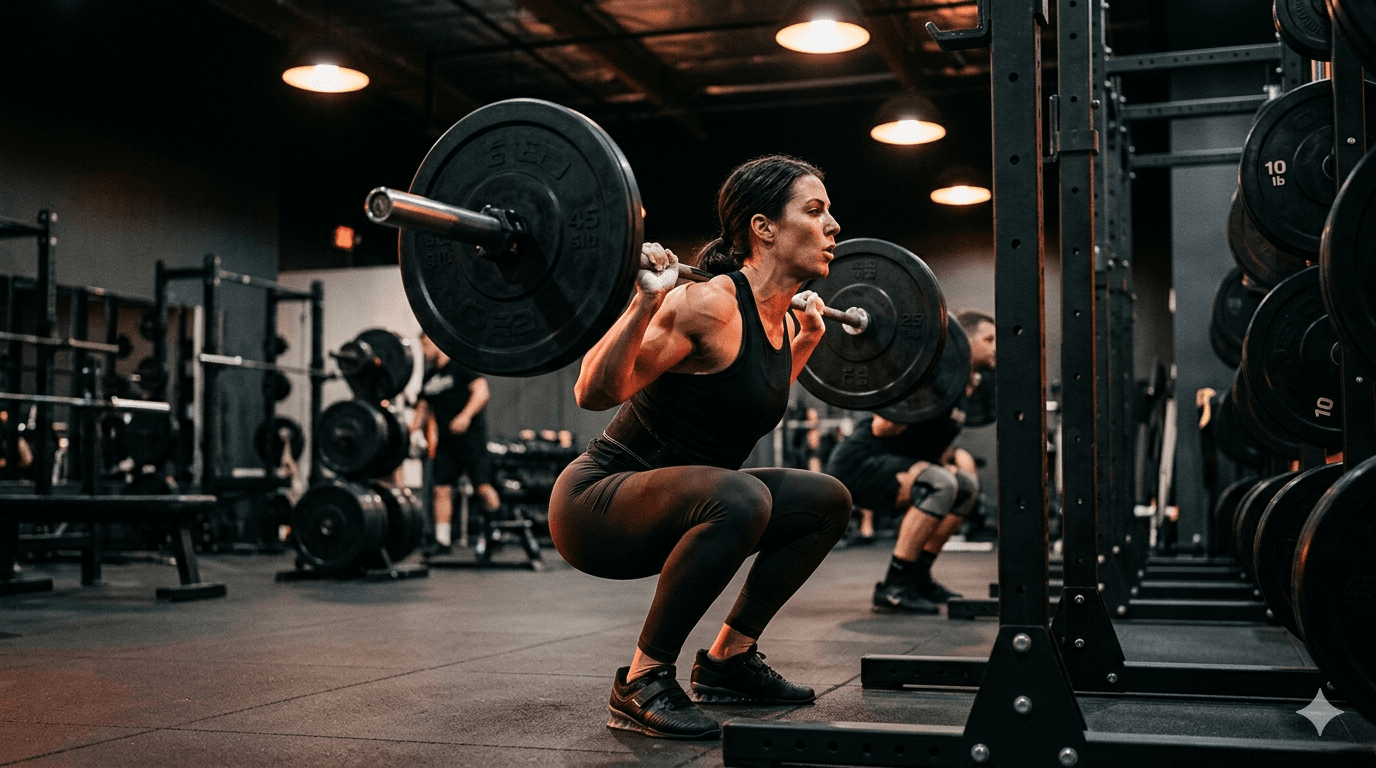
You step up to the rack, unrack the barbell, set your feet, and take a deep breath.
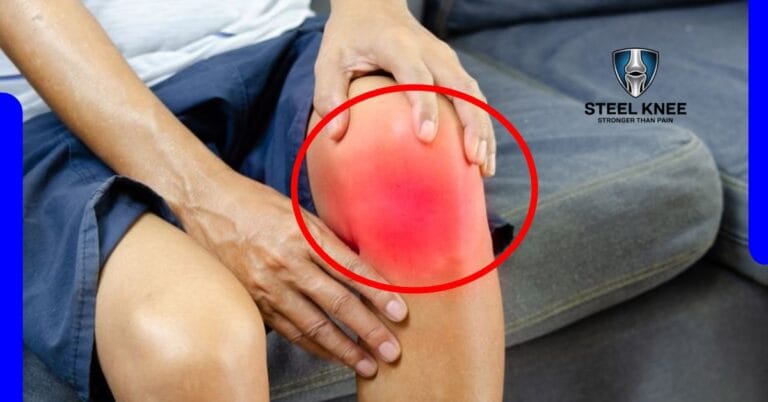
You begin your descent, but before you even reach parallel, it hits you; that sharp, nagging ache right under your kneecap, or perhaps a dull pull along the sides of your joint.
If this sounds familiar, I want you to know that you are far from alone. Throughout my years of working with fitness enthusiasts and individuals tracking back from joint discomfort, knee pain during squats stands out as one of the single most frequent complaints I encounter.
The squat is arguably one of the most functional, powerful movements known to human biology.
The Real Reason Your Knee Pain Never Goes Away
It's not age. It's not "just wear and tear." Most people are missing the root cause — and this natural formula targets it directly, fast.
It builds the quadriceps, fires up the glutes, challenges your core, and reinforces real-world athletic longevity.
Yet, when a single link in the biomechanical chain breaks, this foundational movement pattern can quickly turn into an absolute nightmare for your joints.
But here is the good news: in the vast majority of cases, a painful squat does not mean you have structural, permanent damage, nor does it mean you need to banish squats from your routine forever.
Most of the time, your body is simply screaming a mechanical alert: “Hey, something is fundamentally wrong with the execution, weight distribution, or joint mobility!”
In this comprehensive guide, I am going to share the exact mistakes I consistently see people make in commercial gyms and home setups alike.
More importantly, I will give you the practical, actionable fixes to eliminate that stress so you can squat deeper, heavier, and completely pain-free.
1. The Structural Collapse: Knee Valgus (The “Knee Cave”)
This is, without a doubt, the number one technical error I observe; particularly when the weight on the bar starts creeping closer to a person’s one-rep max.
Knee valgus occurs when your knees track inward toward each other during the descent or, most commonly, right at the “sticky point” as you try to drive back up from the bottom of the squat.
When your knees cave inward while your feet remain planted flat, you create an aggressive, unnatural twisting force.
This alters patellar tracking, forcing your kneecap to grind unevenly against the femoral groove.
Over time, this mechanical friction leads directly to patellofemoral pain syndrome (runner’s knee), meniscus irritation, and severe tendinitis.
Why it happens:
Contrary to what many believe, the root issue rarely starts in the knee itself.
Knee valgus is almost always a direct symptom of weakness or lack of neurological engagement in the hip abductors; specifically the gluteus medius.
If your hips cannot exert the lateral force required to keep your thighs aligned under load, gravity wins, and the knees collapse inward.
How to fix it:
Follow the Toe Line: Your knees must always mirror the exact angle of your feet. If you flare your toes out at a comfortable 15 to 30-degree angle, your knees must actively push outward to track directly over the middle toes.
The Mini-Band Feedback Trick: Add a light loop resistance band (mini-band) just above your knees during warm-up sets. Because the band actively pulls your knees inward, it triggers a reactive neurological response, forcing your brain to fire the gluteus medius to push outward against the resistance. Do 2 sets of 15 bodyweight reps with this setup before touching a barbell.
2. The Ankle Mobility Trap: Poor Dorsiflexion
When someone tells me their knees are killing them after leg day, the very first place I look isn’t actually the knee, it is the ankle.
To achieve a clean, deep squat without spilling your torso forward, your shin bone must be capable of leaning forward over your foot.
This specific movement is called ankle dorsiflexion.
If your ankles are tight; typically caused by chronically stiff calf muscles (the gastrocnemius and soleus) or restrictive ankle joint capsules; your shins remain completely vertical.
To keep from falling flat on your back, your body forces a massive compensation: your heels lift off the ground, or your entire center of gravity shifts forward onto your toes.
This forward weight shift multiplies the shear forces acting on the knee joint exponentially.
The 4-Inch Wall Assessment:
Set your foot exactly 4 inches (approx. 10 cm) away from a solid wall while kneeling.
Without letting your heel leave the floor, try to drive your knee straight forward until it touches the wall.
If your heel pops up, or if your knee cannot reach the wall, your ankle mobility is severely compromised and is highly likely the true source of your knee pain.
How to fix it:
Tissue Release & Dynamic Flossing: Spend 60 seconds per side rolling out your calves with a firm foam roller or lacrosse ball before your session. Follow this up with dynamic ankle rocks against a wall to clear joint restrictions.
The Temporary Raised Heel Modification: While you actively work on your mobility, place a pair of 2.5-lb or 5-lb weight plates under your heels when you squat. Elevating the heel artificially alters the ankle angle, allowing you to hit depth with a vertical torso and immediately dropping the mechanical load on the knees to near zero.
3. Initiating with the Knees (The Quad-Dominant Plunge)
Watch yourself closely in a mirror the next time you drop into a squat. What moves first?
If your very first motion is breaking at the knees and pushing them straight forward over your toes, you are making a fundamental movement pattern error.
Squatting is not a knee-only movement; it is a profound synchronization of the hips and knees.
When you initiate exclusively from the knees, you completely bypass the massive, powerful musculature of your glutes and hamstrings.
Instead, the total force of gravity plus the weight on your back travels directly into the patellar tendon, creating that familiar burning ache right under the kneecap.
How to fix it:
Hips Lead the Dance: The very first micro-movement of a squat should be a subtle hinge at the hips — think about pushing your butt back slightly as if you are reaching for a chair placed just behind you. Once the hips initiate, the knees bend simultaneously to guide you down.
The Box Squat Re-Education: Set up a box or bench behind you at parallel depth. Practice sitting back onto the box, pausing for a split second to transfer the weight to your posterior chain, and driving back up through your heels. This breaks the habit of loading the knees first.
Quick Summary: Mistakes, Root Causes, and Instant Fixes
Common Mistake
Primary Root Cause
The Actionable Fix
Knee Valgus (Inward Caving)
Weak Gluteus Medius / Poor Hip External Rotation
Use a mini-band during warm-ups to force glute engagement.
Heels Lifting / Toe Squatting
Restricted Ankle Dorsiflexion (Tight Calves)
Elevate heels on small plates; perform wall mobility drills.
Knee-First Initiation
Flawed Quad-Dominant Movement Pattern
Initiate the squat by driving the hips backward first (Box Squats).
Butt Wink (Pelvic Tuck)
Hamstring Tightness / Inadequate Core Bracing
Squat to a depth you can control; implement 3D abdominal bracing.
4. The “Butt Wink” (Severe Pelvic Retroversion)
As you reach the absolute bottom of your squat, do you feel your lower back round out, causing your tailbone to tuck neatly under your pelvis?
In strength sports, we refer to this specific fault as the “butt wink.”
While this issue is visually prominent in the lumbar spine, its impact creates a brutal domino effect down the kinetic chain.
When your pelvis rotates under, it shifts the entire center of mass forward during the transition from the descent to the ascent.
This structural tilt forces the knees to absorb an asymmetric, sharp spike in load precisely at the point of maximum joint flexion.
How to fix it:
Earn Your Depth: Stop forcing “ass-to-grass” squats if your mobility doesn’t support it yet. Pull back on your depth and stop exactly one inch before your pelvis begins to tuck under.
Master 360-Degree Core Bracing: Before descending, do not just suck your stomach in. Take a deep diaphragmatic breath into your belly and expand your obliques and lower back outward, locking your core like a rigid cylinder. This locks your pelvis in a neutral, safe alignment throughout the entire movement.
5. Skipping Specific Synovial Warm-Ups
The absolute worst thing you can do for your joints is walk into a cold gym, throw a plate on each side of the bar, and immediately start repping out squats.
Your knee joints contain a highly viscous, natural lubricating fluid called synovial fluid. When you are sedentary, this fluid is thick and stagnant.
Under movement, it warms up, decreases in viscosity, and coats the cartilage smoothly, reducing friction dramatically.
Without a specific warm-up, you are essentially running an engine without any motor oil; the physical grinding causes immediate micro-inflammation and pain.
How to fix it:
Spend just 5 minutes preparing the joint capsule. Start with 3 minutes on a stationary bike at moderate resistance to flush blood into the lower body.
Follow this up with 20 unweighted bodyweight squats, focusing strictly on perfect form.
Finally, pyramid your weight up sequentially (e.g., empty bar, 95 lbs, 135 lbs) rather than jumping directly to your working weight.
Conclusion: Deciphering the Signal
Knee pain during a squat is rarely a death sentence for your fitness goals.
Instead, it is an intelligent, highly accurate biofeedback signal from your body indicating that a mechanical correction is required.
By recording your squats from both the front and side angles, you can audit your movement against these five pillars, implement the fixes, and build a truly resilient, bulletproof structure.
Disclaimer: If your knee pain is sharp, localized, accompanied by swelling, popping, or persists even during simple daily activities like walking down stairs, stop training immediately and consult an orthopedic specialist or licensed physical therapist.
We use cookies to ensure that we give you the best experience on our website. If you continue to use this site we will assume that you are happy with it