The Hidden Connection: Why Knee Pain Can Start Elsewhere in the Body
Spread Health and Love
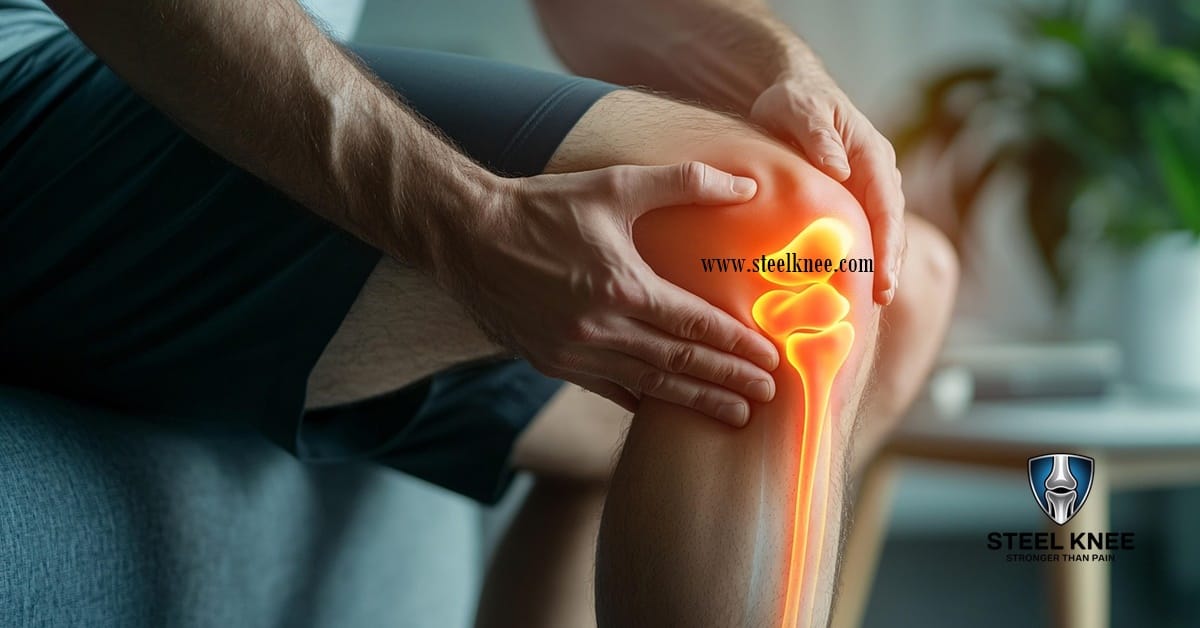
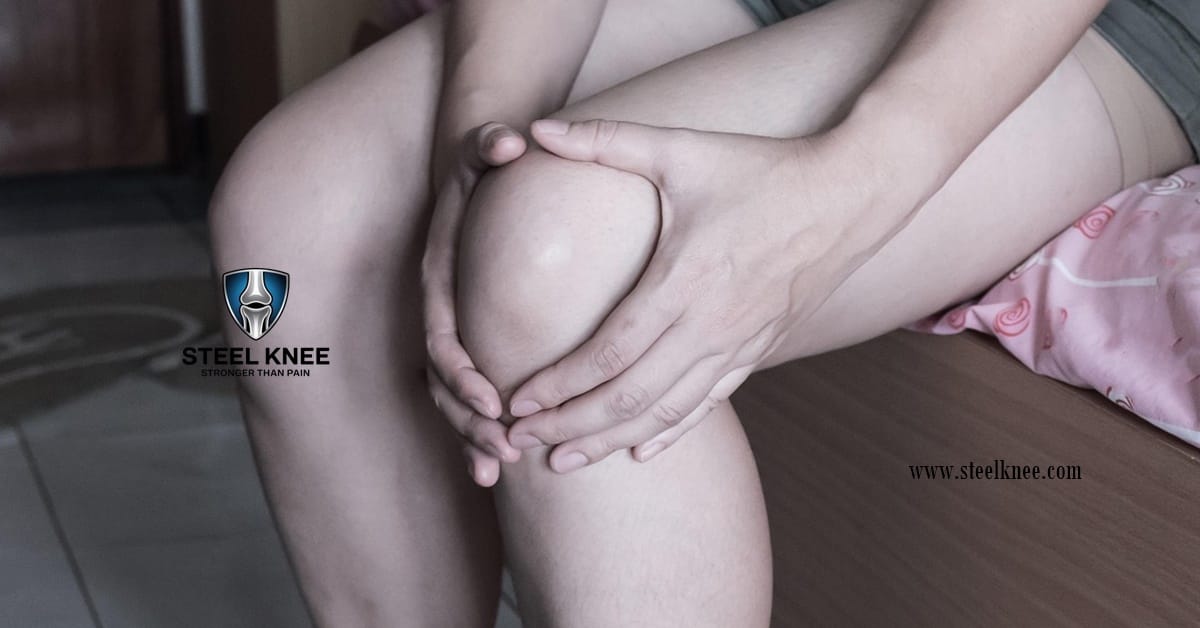
Perhaps no one has had this conversation with you before. But someone needs to speak the truth: knee pain can start elsewhere in the body.
If you are dealing with persistent, nagging knee pain, you have likely already tried all the conventional quick fixes:
ice packs, compression sleeves, anti-inflammatory gels, and endless days of rest. But what happens when the pain returns the moment you resume your normal routine?
The human body does not operate as a collection of isolated parts; it functions as an interconnected kinetic chain.
The knee is a hinge joint trapped directly in the middle between your hip and your foot.
The Real Reason Your Knee Pain Never Goes Away
It's not age. It's not "just wear and tear." Most people are missing the root cause — and this natural formula targets it directly, fast.
If the joint above (the hip) loses stability, or the joint below (the foot) loses mobility, your knee ends up taking the heat—absorbing unnatural torque and sheer forces it was never designed to handle.
In this deep dive, I want to take you behind the scenes of joint mechanics to reveal how your hips, feet, and even your lower back could be sending pain straight to your knees—and what you can do to break the cycle.
1. The Hip Connection: Your Lower Body’s Steering Wheel
Think of your hips as the steering wheel for your legs.
If the steering wheel is out of alignment or lacks strength, the tires (your knees and feet) will drift off course.
The key player here is the gluteus medius.
Located on the outer side of your hip, its primary job is to keep your pelvis level whenever you stand on one leg—an action you repeat thousands of times a day while walking, running, or climbing stairs.
What happens when your hips fail:
When your hip stabilizers are weak or inactive from hours of sitting at a desk, your thigh bone (femur) internally rotates and collapses inward under load.
This creates a biomechanical fault known as knee valgus (the “knee cave”).
This twisting motion forces your kneecap (patella) to track unevenly against the femoral groove.
Over time, this friction leads to patellofemoral pain syndrome, runner’s knee, and chronic cartilage wear.
The root issue was never a weak knee; it was a hip that failed to hold the line.
2. The Feet and Ankles: The Foundation of the Chain
If the hips act as the steering wheel, your feet are the foundation of a building.
If the foundation tilts or collapses, structural cracks appear further up the walls.
Your foot features a natural arch designed to act as a biological shock absorber.
Additionally, your ankle joint requires adequate dorsiflexion (the ability to bend your shin forward over your toes) to navigate daily movement smoothly.
The two main foot and ankle breakdowns:
Excessive Pronation (Flat Feet): If your arch collapses inward when you walk, your shin bone (tibia) is forced to rotate inward as well. Because the knee sits directly atop the tibia, it twists inward with every single step you take.
Restricted Ankle Mobility: Tight calves or rigid ankle joints prevent your shins from traveling forward. To compensate and avoid falling over, your body forces the knee to absorb excessive stress to reach full depth during daily tasks.
Fixing these mechanical compensations and foot strike patterns is essential for long-term joint health.
Did you know that knee pain can sometimes be a communication breakdown in your nervous system?
The lower back (lumbar spine) houses the nerve roots that exit the spinal cord and branch down to power the muscles and sensation in your legs.
In many cases, an individual may feel sharp discomfort in the knee joint even when an MRI shows pristine cartilage and intact ligaments.
In clinical terms, this is known as referred pain.
How your lower back impacts your knees:
Nerve roots exiting the L3, L4, and L5 vertebrae provide neural signals directly to the front and sides of your knee.
If you have a bulging disc, nerve impingement, or mild sciatica in your lower back—even if your back doesn’t actively hurt—that compressed nerve can send misfired pain signals straight down to your knee.
Furthermore, when your back feels tight, your gait naturally changes to protect your spine, transferring unbalanced weight directly onto one knee joint.
Weak Gluteus Medius (Hip): Causes the knee to cave inward during movement (Knee Valgus). The fix is targeted hip abduction work and dynamic mini-band warm-ups.
Over-Pronation / Flat Arches (Foot): Causes the shin to rotate inward and flatten the kinetic chain. The fix is supportive footwear, foot arch strengthening, and calf foam rolling.
Restricted Dorsiflexion (Ankle): Forces forward weight shift onto the toes, spiking patellar tendon load. The fix is dynamic ankle mobility drills and heel elevation drills.
L4-L5 Nerve Impingement (Lumbar Spine): Sends referred pain down the nerve path directly to the knee joint. The fix is core bracing, pelvic alignment, and spinal decompression.
A Quick Self-Assessment Test
To start tracking down the true origin of your knee discomfort, ask yourself these three quick questions:
Does your knee pain improve after stretching your hips or foam rolling your glutes? If yes, your knee is likely absorbing stress from poor pelvic stabilization.
Do the soles of your shoes wear down heavily on the inner edge? This is a strong indicator that your alignment issue originates at the foot and travels up.
Does your knee pain flare up after sitting in a slumped position for long periods? This often points toward referred nerve irritation coming from the lower back.
Conclusion: Treat the Cause, Not Just the Symptom
Slapping an ice pack or a compression sleeve on a painful knee is like turning off a smoke alarm while the fire is still burning in the next room.
To build resilient, bulletproof joints, you have to treat your body as an integrated system.
By strengthening your hip stabilizers, restoring ankle mobility, and maintaining proper spinal alignment, you take your knees out of the line of fire.
When your kinetic chain works in harmony, joint pressure drops, and your body finally gets the environment it needs to recover and thrive.
Disclaimer: This content is for educational and informational purposes only to help you improve your daily movement mechanics. If your knee pain is acute, accompanied by severe swelling, clicking, popping, or instability, consult an orthopedic specialist or physical therapist for a personalized evaluation.
We use cookies to ensure that we give you the best experience on our website. If you continue to use this site we will assume that you are happy with it